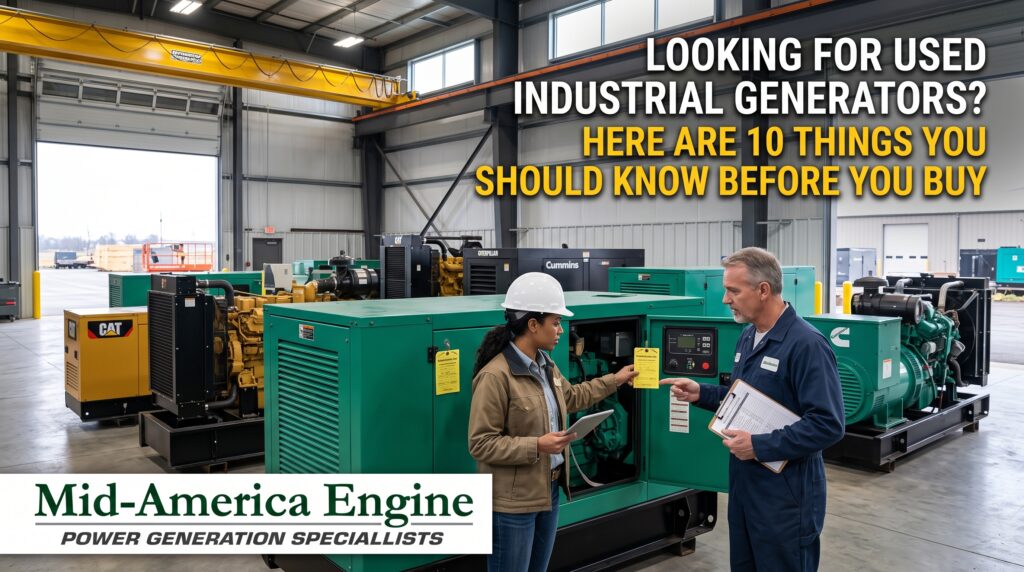
When downtime isn't an option, the cost of power failure far outweighs the initial investment in equipment. However, savvy facility managers and engineers recognize that a brand-new generator isn’t always the most pragmatic choice. Buying used industrial generators can save your organization 30% to 70% compared to new equipment, often with significantly faster lead times.
But the "used" market is high-stakes. A poorly maintained unit is a liability, not an asset. At Mid-America Engine, we’ve spent over 40 years vetting, testing, and installing power solutions. We know exactly where the hidden failures reside.
Before you sign a purchase order for a used unit, here are the 10 critical factors you must evaluate to ensure your backup power is as dependable as a new installation.
1. Precise Sizing and Voltage Compatibility
It is a common mistake to buy based on kW rating alone. You must ensure the generator matches your facility’s specific electrical requirements. This includes checking the voltage (e.g., 208V, 480V, or 4160V) and the phase (single vs. three-phase).
Furthermore, consider the "surge" requirements for starting large motors. If your generator is undersized for initial motor inrush, the system will trip during the exact moment you need it most. We recommend a full load analysis before browsing our current inventory.
2. The "Odometer" Trap: Age vs. Hours
In the world of industrial power, the hour meter is like a car’s odometer, but age matters just as much as usage. A 15-year-old generator with only 200 hours might seem like a steal, but seals, gaskets, and hoses rot over time if the unit isn't exercised. Conversely, a 3-year-old unit with 2,000 hours may be in better functional shape because it was regularly run and maintained.
Always look for a balance between low hours and a manufacturing date that suggests the components are still within their reliable service life.
3. Application History (Standby vs. Prime)
Where did the generator spend its previous life? A unit used for standby power in a data center or hospital is the "gold standard." These units typically live in climate-controlled environments and are meticulously maintained.
Units used for prime power (the main power source) on construction sites or remote mining operations endure far more stress, vibration, and environmental contamination. Always ask for the application history to gauge how hard the engine was worked.
4. Maintenance Logs and Documentation
Reliability is built on a foundation of documentation. If a seller cannot provide service records, assume the maintenance didn't happen. You want to see evidence of:
- Regular oil and filter changes.
- Coolant system flushes.
- Battery replacements.
- Fuel system cleanings.
Standardized maintenance follows OEM checklists. If these records are missing, you are buying a mystery: and in critical facilities, mysteries are expensive.
5. Comprehensive Visual Inspection
A professional inspection isn't just a walk-around. You need to look for specific red flags:
- Leaks: Check for oil, fuel, or coolant pooling under the skid.
- Rust and Corrosion: Focus on the enclosure and the frame. Surface rust is manageable; structural corrosion is a deal-breaker.
- Vibration Mounts: Inspect the isolators. If they are cracked or collapsed, the engine could damage its own housing during operation.
- Wiring: Look for brittle insulation or "rat's nest" wiring in the control cabinet.
6. Control Panel Modernization and Compatibility
The engine might be mechanical, but the brains are digital. Ensure the control panel is functional and, more importantly, compatible with your existing Automatic Transfer Switch (ATS) and building management systems.
Older analog panels can sometimes be retrofitted with modern digital controllers, but you must factor that cost into your initial bid. If you have questions about specific configurations, our FAQ page covers common technical concerns.

7. Engine and Fuel System Integrity
The engine is the heart of the system. Beyond checking the oil level, look for sludge or a metallic sheen in the fluid, which indicates internal wear. Check the belts for glazing and the hoses for "soft spots."
For diesel units, the fuel tank itself is a point of failure. If fuel has been sitting for years without biocides, you likely have "algae" or sludge that will clog injectors the moment the unit hits a full load.
8. Alternator and Electrical Testing
While the engine gets the attention, the alternator does the work of converting mechanical energy into electricity. We recommend a Megger test (insulation resistance test) on the alternator windings. This test identifies if the insulation has broken down due to moisture or heat, which could lead to a catastrophic short circuit once the unit is under load.
9. The "Must-Have": Full Load Bank Testing
Never purchase a used industrial generator without a recent load bank test report. A "no-load" start is insufficient. A generator might sound perfect idling, but fail completely when asked to carry 80% or 100% of its rated capacity.
A load bank test forces the unit to reach operating temperature and proves the cooling system, fuel system, and governor can handle the stress. We perform rigorous load testing on our equipment to ensure every unit we sell delivers on its nameplate promise.

10. The Reputation of the Seller
Are you buying from a broker or an inventory owner? A broker often never sees the equipment; they just flip paper. An inventory owner, like Mid-America Engine, physically stocks, inspects, and services the units in our own facility.
We take an engineering-driven approach. We don't just sell you a machine; we offer honest recommendations based on your specific site requirements. Our goal is to never oversell you on equipment you don't need, but to ensure what you do buy works every single time the grid goes dark.
Final Thoughts: Fast Lead Times and Dependable Power
In an era of supply chain instability, waiting 52 weeks for a new generator is often not an option. A used industrial generator is the fastest way to secure your facility. By following this checklist and partnering with an established provider, you can turn an idle asset into a dependable power solution for your bottom line.

Ready to secure your power? Browse our current selection of new and used generators or contact our engineering team today for a custom consultation.