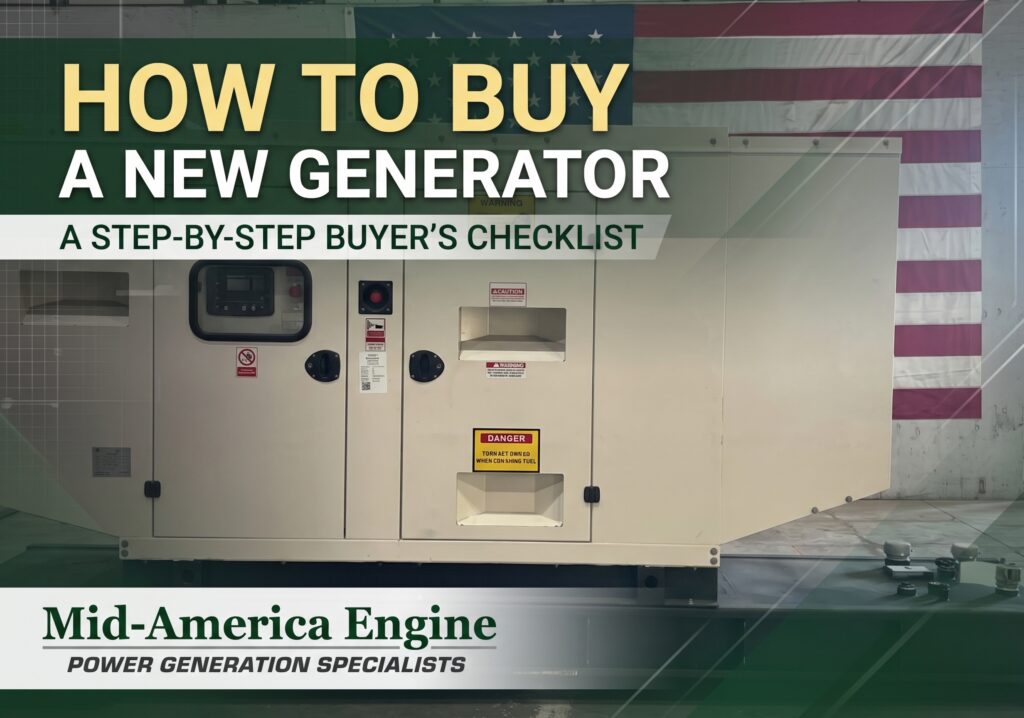
Buying a new industrial generator is a system decision, not just an equipment purchase. The generator, transfer switch, fuel supply, installation, and commissioning all have to work together. A low equipment price is not a good value if it leaves out essential site work or fails to meet your operating requirements.
Use this checklist to organize the purchase, compare proposals, and identify questions to resolve before placing an order. Mid-America Engine has supported industrial power applications for more than 40 years. Our approach is engineering-driven, with honest recommendations and no unnecessary oversizing.
1. Define the generator’s mission
Start with how the generator will operate. A standby set serves as backup for a reliable utility source. A prime-rated generator is intended for applications where it supplies power as a primary source. These duties have different rating and operating requirements, so state the intended application in your request for quote.
Then document:
- Which loads are critical, noncritical, or eligible for load shedding
- How long the generator must operate during an outage
- Whether on-site fuel autonomy is required
- Whether the generator will operate alone or in parallel with other sets
- Planned facility or load growth during the equipment’s service life
This is not a substitute for a formal load study. It gives suppliers the operating context they need to recommend equipment that fits the actual job.
2. Put the electrical requirements in writing
List the electrical requirements you know, and have a qualified engineer or supplier verify them for the application. Include:
- Required kW and kVA, and the assumed power factor
- Voltage, phase, and frequency
- Number of generator leads and whether reconnection is required
- Generator breaker requirements and coordination with downstream protection
- Load sequencing and acceptable voltage and frequency response
- Automatic transfer switch (ATS) amp rating, poles, and transition type
Also specify whether the ATS is service-entrance rated or a feeder switch. That choice affects how the switch is applied in the electrical system; it should not be left to assumption. For motor starting and other transient demands, use a detailed application review rather than choosing equipment based only on running load. See our guide to generator sizing for motor starting.
An EPG Model 60P listed by MAE illustrates why the details matter: the listed new, 60 kW diesel unit is three-phase, 277/480 volts, and has 12 leads. Those attributes may suit some applications, but they do not establish suitability for every facility. Confirm the complete configuration against your electrical design.

3. Confirm the site and installation scope
Before selecting a model, check that the site can accommodate it and support reliable operation. Confirm:
- Foundation or pad design, anchoring, and drainage
- Equipment dimensions, weight, lifting points, and rigging access
- Service clearances and safe access for maintenance
- Air intake and radiator discharge paths
- Exhaust routing and separation from building openings
- Sound attenuation requirements and any local noise limits
- Fuel-system layout, fill access, and containment requirements
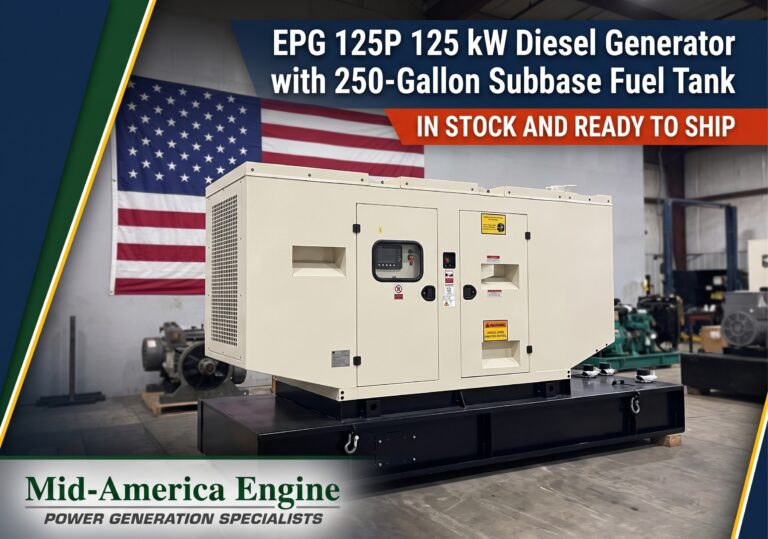
Decide whether the fuel tank should be subbase-mounted, a separate day tank, or a bulk storage tank. The right setup depends on required runtime, available space, fuel-system design, and applicable codes. Make sure the proposal clearly states which tank, piping, controls, and installation work are included.
4. Choose fuel and verify emissions requirements
Diesel and natural gas each have advantages and tradeoffs. Compare fuel availability, runtime, site infrastructure, permitting, and operating needs, not fuel type in isolation. Our article on industrial diesel generators versus natural gas provides a broader comparison.
Emissions requirements also depend on the equipment, its use, the jurisdiction, and the project’s permits. Tier 4, Tier 2, or Tier 3 engine configurations, and any required after-treatment, must be verified for the specific application. Do not treat a tier label or a seller’s verbal assurance as proof of compliance. Request the applicable certification and emissions documentation, then review it with your permitting professionals.
For projects that may be affected by Illinois data center requirements, see our overview of Tier 4 rules and Illinois SB 0025. Confirm current requirements with the relevant authority before specifying or purchasing equipment.
5. Request a complete documentation package
A new generator still needs to be verified by its records and identifying information. Ask the seller for a package that matches the exact unit being offered, including:
- Manufacturer, model, serial number, and data plates
- Engine and alternator specifications
- Date of manufacture (DOM)
- Hour-meter reading and an explanation of recorded hours
- Factory test records and any available inspection reports
- Controller, breaker, and enclosure details
- Emissions documentation, where applicable
- Warranty terms, manuals, and recommended service schedule
Check that the documentation matches the equipment on the quote. The engine and alternator plates, for example, help confirm the components and ratings actually supplied.


6. Clarify freight and delivery responsibilities
A generator’s price does not always include delivery to the final installation point. Before comparing quotes, confirm the shipping terms and who is responsible for freight, unloading, rigging, and any delivery-site constraints.
If a proposal says “FOB,” ask the seller to define the named location and exactly when responsibility for freight costs, damage risk, and handoff transfers. The meaning can depend on the sales contract and the terms used. Get it in writing rather than relying on the acronym alone.
Also confirm the delivery vehicle can reach the site, whether a crane or other rigging is required, and who coordinates permits or access restrictions. A clear logistics plan prevents avoidable delays when the unit arrives.
7. Plan commissioning and long-term support
The purchase is not complete when the generator reaches the site. Define what commissioning includes: startup, system checks, ATS operation, load-bank testing if required, operator orientation, and handover documents. Agree on the test scope and acceptance criteria in advance, including which party provides test equipment and records the results.
Before finalizing the purchase, confirm the support plan:
- Preventive maintenance schedule and service responsibilities
- Parts availability and warranty contact process
- Fuel-system maintenance requirements, including fuel quality checks where applicable
- Operator training and access to operating manuals
- Long-term service or rental options if your operating plan changes
MAE provides equipment and turnkey installation support, as well as maintenance and rental options. The scope depends on the project, so have responsibilities and exclusions spelled out in the proposal.
Compare complete proposals, not just generator prices
A useful comparison includes the generator, ATS, fuel system, site work, freight, rigging, commissioning, warranty, and support. Ask each supplier to identify included items, exclusions, assumptions, and owner-supplied work. That makes it easier to see whether proposals are truly comparable.
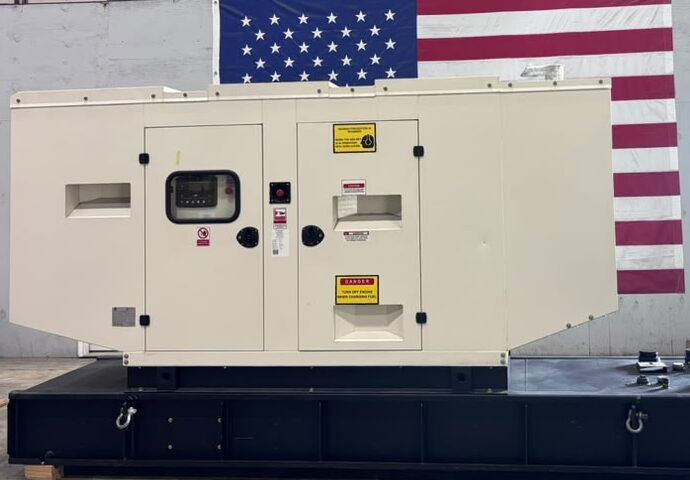
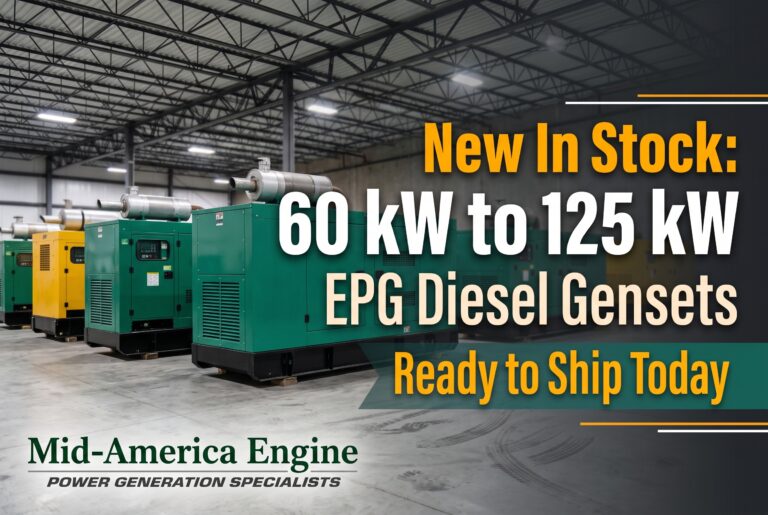
MAE carries new generator sets, including EPG units with Deep Sea controls and sound-attenuated enclosures. Availability and configuration vary by unit. Browse our generator sets inventory and ask for an application review. We will help identify what fits your requirements and what does not, without overselling capacity or features you do not need.
For help with a new generator or commercial generator installation, contact Mid-America Engine.
Frequently Asked Questions
How do I size a generator?
Start with a documented load assessment that covers critical loads, running demand, starting requirements, load sequencing, electrical configuration, and future growth. A qualified engineer or supplier should verify the final selection and performance requirements for the site. Avoid choosing equipment from a single kW figure alone.
What documents should a seller provide?
Request the generator’s make, model, serial number, engine and alternator details, data plates, DOM, hours, factory test records, warranty terms, manuals, and applicable emissions documentation. Verify that the records correspond to the exact unit in the proposal.
What is FOB and why does it matter?
FOB is a shipping term that can describe where delivery occurs and how costs or risk are allocated. Its precise meaning depends on the contract and terms used. Ask for the named location and written clarification of who handles freight, unloading, and damage responsibility.
How long does generator installation take?
There is no single timeline. Site readiness, permitting, equipment configuration, foundation work, fuel and electrical connections, delivery logistics, and commissioning all affect the schedule. Request a project-specific schedule that identifies dependencies and responsibilities.
What maintenance does a new generator need?
Maintenance depends on the engine, application, operating hours, and manufacturer recommendations. It commonly includes scheduled engine service, battery and cooling-system checks, inspections, exercise or readiness testing, and attention to fuel condition for diesel units. Follow the manufacturer’s manual and establish a documented service plan.