Choosing the wrong industrial engine is expensive. It leads to downtime, higher fuel bills, shorter equipment life, and constant maintenance headaches. Choosing the right one improves productivity, lowers operating costs, and keeps your equipment running when it matters most. This guide breaks down exactly how to choose the right industrial engine for heavy equipment, based on real-world operating conditions, not brochure specs.
1. Start With the Application, Not the Brand
The most common mistake buyers make is starting with a brand name. Engines should be selected based on application first.
Ask these questions upfront.
What type of equipment will the engine power? Excavators, loaders, crushers, generators, pumps, compressors, or agricultural machinery all have very different load profiles.
Will the engine run continuously or intermittently? A standby engine and a 24/7 production engine are not the same.
What is the operating environment? Dust, heat, altitude, moisture, and vibration all affect engine performance and longevity.
Is the equipment mobile or stationary? This impacts cooling systems, mounting requirements, and emissions compliance.
An engine that performs well in a controlled facility may fail quickly on a dusty construction site or mining operation.
2. Match Power Output to Real Load Conditions
Horsepower numbers alone are misleading. What matters is usable power under load.
Look at rated horsepower versus continuous horsepower. Many engines advertise peak output, not what they can sustain for hours.
Torque curve matters more than peak horsepower for heavy equipment. High low-end torque keeps machines productive under load.
Avoid oversizing. Bigger engines burn more fuel, cost more to maintain, and often operate inefficiently at partial loads.
Avoid undersizing. Engines running at full throttle constantly experience faster wear and higher failure rates.
A properly sized engine should operate comfortably at 70–85% of its rated capacity during normal use.
3. Understand Duty Cycle and Load Factor
Heavy equipment engines are built for different duty cycles.
Light-duty engines handle variable loads and short runtimes.
Medium-duty engines handle moderate loads with frequent starts and stops.
Heavy-duty industrial engines are designed for continuous, high-load operation.
If your equipment runs long shifts, handles heavy material, or operates in production environments, you need an engine designed for sustained duty. Using a lighter-duty engine to save upfront cost usually results in higher lifetime cost.
4. Consider Fuel Type and Efficiency
Diesel remains the dominant choice for heavy equipment due to durability and torque. That said, fuel strategy still matters.
Evaluate fuel consumption at typical operating loads, not idle or no-load conditions.
Consider fuel availability and quality in your operating region.
Check compatibility with biodiesel or alternative fuels if required.
Factor in emissions-related fuel penalties on newer engines.
Fuel efficiency improvements of even 3–5% can translate into massive savings over the engine’s lifecycle.
5. Emissions Compliance Is Not Optional
Industrial engines must meet EPA regulations based on application and use.
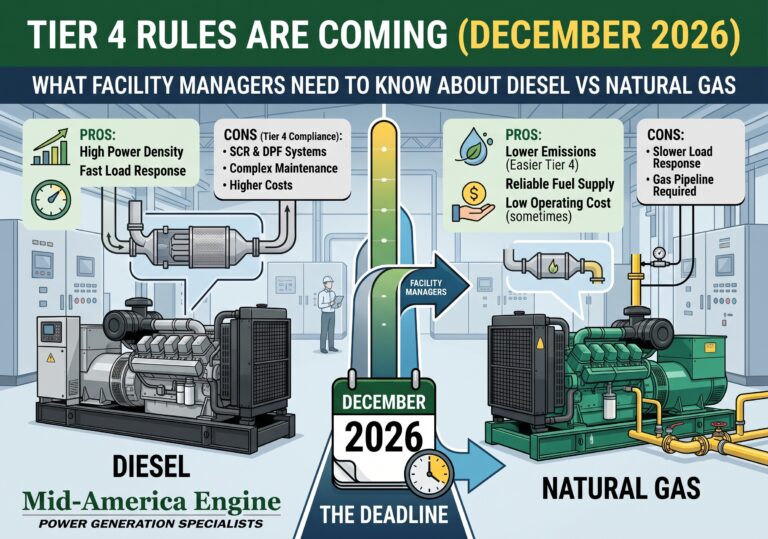
Tier 4 Final compliance is mandatory for most new industrial engines in the U.S.
Emissions systems add complexity, heat, and maintenance requirements.
Aftertreatment systems require proper duty cycles to function correctly.
An engine that meets emissions standards but is mismatched to your workload can suffer from regeneration issues, increased downtime, and premature failures.
6. Evaluate Cooling and Filtration Systems
Engines fail more often from heat and contamination than from mechanical defects.
Ensure the cooling system is designed for ambient temperatures and load conditions.
High-dust environments require heavy-duty air filtration systems.
Fuel filtration quality directly impacts injector life and performance.
Oil capacity and filtration affect service intervals and wear rates.
Never assume a base configuration is sufficient. Cooling and filtration should be tailored to your environment.
7. Prioritize Serviceability and Parts Availability
Downtime is more expensive than the engine itself.
Check service access points for filters, belts, and diagnostics.
Confirm parts availability and lead times in your region.
Understand service interval requirements and maintenance complexity.
Avoid engines that require proprietary tools or limited-service networks.
An engine with great specs but poor support will cost you more in lost production.

8. New, Rebuilt, or Remanufactured: Choose Strategically
Each option has trade-offs.
New engines offer the longest service life and full warranty but highest upfront cost.
Rebuilt engines offer lower cost with reliable performance when rebuilt correctly.
Remanufactured engines can deliver near-new performance at a reduced price point.
The key is build quality, documentation, and warranty coverage, not just price.
9. Look Beyond the Engine Block
An industrial engine is part of a system.
Verify compatibility with existing mounts, couplings, and drivetrains.
Confirm electronic control integration with your equipment.
Ensure auxiliary components like alternators, starters, and PTOs are correctly sized.
Plan for future upgrades or repowers if equipment usage changes.
A well-integrated engine reduces installation issues and long-term maintenance costs.
10. Total Cost of Ownership Matters More Than Purchase Price
The cheapest engine rarely ends up being the most cost-effective.
Factor in fuel consumption, maintenance costs, service intervals, and downtime risk.
Consider expected lifespan under real operating conditions.
Account for resale or repower value.
Smart buyers focus on cost per operating hour, not invoice price.
Why Mid-America Engine Is Better for Your Business
Choosing the right engine is only half the equation. Choosing the right engine partner is what protects your investment.
Mid-America Engine specializes in industrial engines for real-world applications, not one-size-fits-all solutions. Their team evaluates your equipment, duty cycle, environment, and compliance needs before recommending an engine. That means fewer surprises after installation and better long-term performance.
They offer new, rebuilt, and remanufactured industrial engines with documented build standards, application-specific configurations, and strong warranty coverage. Parts availability, service support, and technical guidance are built into the relationship, not added later as an upsell.
For businesses that depend on uptime, reliability, and predictable operating costs, Mid-America Engine delivers engines that are matched correctly, supported properly, and built to work as hard as your equipment does.
Frequently Asked Questions
How do I know if my engine is undersized for my equipment?
If the engine regularly runs at full throttle, struggles under load, or overheats, it is likely undersized for the application.
Is higher horsepower always better for heavy equipment?
No. Excess horsepower increases fuel consumption and operating costs without improving productivity if torque and duty cycle are mismatched.
What is the most important factor when choosing an industrial engine?
Application fit. Load profile, duty cycle, and environment matter more than brand or peak horsepower.
How long should a heavy-duty industrial engine last?
With proper sizing and maintenance, many industrial engines exceed 20,000 operating hours before major overhaul.
Are rebuilt engines reliable for heavy equipment?
Yes, when rebuilt to proper specifications with quality components and backed by a warranty.
How do emissions systems affect engine selection?
Emissions systems must align with duty cycle. Engines that idle excessively or run at low loads can experience regeneration issues.
What maintenance factors should influence my engine choice?
Service intervals, oil capacity, filter access, and parts availability directly affect downtime and operating cost.
Can I repower older equipment with a newer engine?
Yes, but compatibility with mounts, electronics, cooling, and emissions must be evaluated carefully.
What role does torque play in engine performance?
Torque determines how well the engine handles heavy loads at low speeds, which is critical for most heavy equipment.
How do I estimate total cost of ownership for an engine?
Calculate fuel usage, maintenance costs, expected lifespan, downtime risk, and resale value over the engine’s operating life.