Industrial engines don’t fail suddenly. They fail gradually, quietly, and expensively when preventive maintenance is ignored. Most premature engine breakdowns are not design flaws; they are maintenance failures. The good news is this: with the right preventive maintenance practices, you can extend engine life by thousands of operating hours, reduce downtime, and significantly lower total cost of ownership.
This guide covers proven, field-tested preventive maintenance practices for industrial engines used in heavy equipment, power generation, agriculture, construction, and industrial operations. It’s written to help operators, fleet managers, and procurement teams make smarter decisions and protect their investment long term.
1. Follow Maintenance by Operating Hours, Not the Calendar
One of the most common mistakes is maintaining engines based on dates instead of usage.
Industrial engines wear based on load and hours, not months. An engine running 10 hours a day needs service far sooner than one used occasionally, even if both were installed at the same time.
Track engine hours accurately using hour meters or telematics.
Schedule oil changes, filter replacements, and inspections strictly by manufacturer-recommended operating hours.
Adjust intervals for harsh environments such as dust-heavy, high-heat, or continuous-load applications.
Engines maintained by hours consistently outlast those maintained by guesswork.
2. Oil Management Is the Single Most Important Practice
Oil is the lifeblood of an industrial engine. Poor oil practices are the fastest way to shorten engine life.
Use the correct oil grade and specification recommended for your engine and application.
Change oil at the right intervals, not when it “looks dirty.”
Always replace oil filters during oil changes.
Monitor oil pressure and investigate drops immediately.
For critical equipment, oil analysis programs can detect internal wear, contamination, and fuel dilution long before failures occur.
3. Keep Air Filtration Clean and Properly Sealed
Engines don’t die from use. They die from dirt.
Dust and debris entering the combustion chamber cause accelerated wear on pistons, rings, and cylinder walls. This damage is permanent and cumulative.
Inspect air filters regularly, especially in construction, mining, and agricultural environments.
Replace filters before they are fully clogged, not after.
Ensure air intake systems are properly sealed with no cracks or loose fittings.
Never clean dry paper filters with compressed air, as this damages the media.
Clean air dramatically increases engine lifespan.
4. Fuel Quality and Filtration Cannot Be Ignored
Modern industrial engines rely on precise fuel delivery. Poor fuel quality destroys injectors and fuel pumps.
Use clean, high-quality fuel from reliable sources.
Drain water separators regularly.
Replace fuel filters at recommended intervals or sooner if contamination is present.
Store fuel properly to prevent water intrusion and microbial growth.
Fuel system repairs are among the most expensive engine repairs. Preventive filtration is cheap insurance.
5. Cooling System Maintenance Prevents Catastrophic Failure
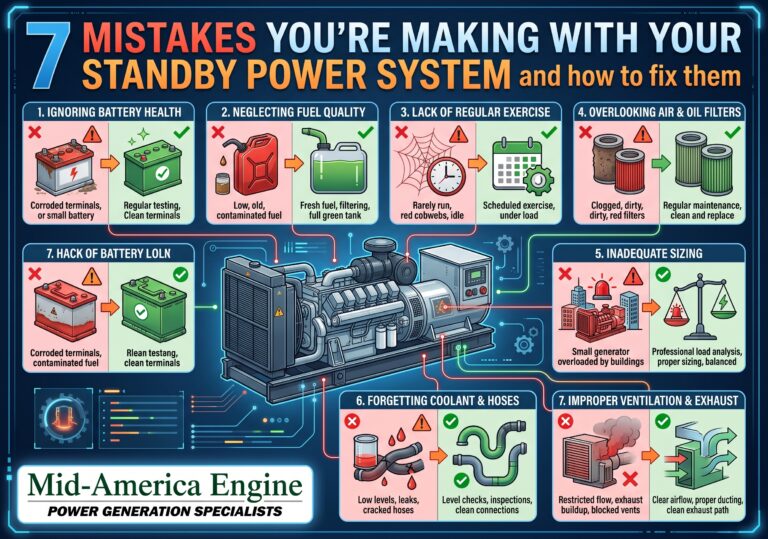
Overheating causes warped heads, blown gaskets, and cracked blocks. Cooling system neglect is a silent engine killer.
Check coolant levels frequently and top off with the correct coolant type.
Inspect hoses, belts, and clamps for wear or leaks.
Clean radiators and coolers to remove dust and debris buildup.
Flush and replace coolant according to manufacturer guidelines.
Engines rarely survive repeated overheating events without long-term damage.
6. Monitor Belts, Hoses, and External Components
Small external failures often lead to big internal damage.
Inspect belts for cracking, glazing, or looseness.
Check hoses for soft spots, swelling, or leaks.
Replace aging components proactively instead of waiting for failure.
Ensure proper belt tension to avoid slippage or bearing damage.
A failed hose can shut down an entire operation in minutes.

7. Warm-Up and Cool-Down Procedures Matter
Engines are not designed to go from cold start to full load instantly.
Allow engines to warm up before applying heavy loads, especially in cold weather.
Avoid extended idling, which causes incomplete combustion and carbon buildup.
Let engines cool down gradually before shutdown after heavy operation.
Proper temperature management reduces internal stress and wear.
8. Watch for Early Warning Signs and Act Fast
Engines usually warn you before they fail. Ignoring those warnings is costly.
Investigate unusual noises, vibrations, or smells immediately.
Address warning lights or fault codes without delay.
Track changes in fuel consumption or oil usage.
Document recurring issues to identify patterns.
Early intervention almost always costs less than reactive repairs.
9. Train Operators, Not Just Technicians
Even the best maintenance plan fails if operators misuse equipment.
Train operators on proper startup, shutdown, and operating procedures.
Educate teams on basic daily inspections and reporting issues early.
Discourage abusive practices like overloading, excessive idling, or ignoring alarms.
Well-trained operators extend engine life as much as good technicians do.

10. Keep Detailed Maintenance Records
Engines with documented service histories consistently last longer and retain higher value.
Log all maintenance activities, repairs, and inspections.
Track parts replacements and service intervals.
Use records to plan overhauls, rebuilds, or repowers proactively.
Good records turn maintenance from a cost into a strategy.
Why Mid-America Engine Is Better for Your Business
Preventive maintenance is most effective when it’s backed by expert guidance and the right engine partner.
Mid-America Engine specializes in industrial engines built and supported for long-term reliability. Their team understands real-world operating conditions and helps customers choose engines, maintenance schedules, and configurations that reduce failures and extend service life.
They provide new, rebuilt, and remanufactured engines with documented standards, reliable parts availability, and knowledgeable support. Whether you’re maintaining a single engine or managing an entire fleet, Mid-America Engine helps you plan maintenance proactively instead of reacting to breakdowns.
For businesses that depend on uptime, predictable costs, and long engine life, Mid-America Engine delivers more than engines. They deliver confidence.
Frequently Asked Questions
How often should an industrial engine be serviced?
Service intervals depend on operating hours, load, and environment, but most engines require routine maintenance every 250–500 hours.
What is the most important preventive maintenance task?
Proper oil and filtration management has the greatest impact on engine longevity.
Can preventive maintenance really extend engine life?
Yes. Engines with consistent preventive maintenance often last thousands of hours longer than neglected engines.
Is oil analysis worth it for industrial engines?
For critical or high-hour equipment, oil analysis provides early warning of internal wear and contamination.
What causes most premature engine failures?
Poor lubrication, dirty air or fuel, overheating, and delayed maintenance.
How does operator behavior affect engine life?
Improper operation, excessive idling, and ignoring warning signs significantly shorten engine lifespan.
Should maintenance intervals change in harsh environments?
Yes. Dust, heat, and continuous loads require more frequent inspections and service.
Do rebuilt engines need different maintenance practices?
No. Properly rebuilt engines follow the same maintenance principles as new engines.
What records should be kept for engine maintenance?
Oil changes, filter replacements, inspections, repairs, fault codes, and operating hours.
When should an engine be rebuilt instead of repaired?
When wear becomes widespread or repair costs approach rebuild value, a rebuild is often more cost-effective.